I
Smiljana
Almost three centuries ago, a woman was fleeing the Ottomans together with her two sisters-in-law, Ojdana and Jasna. Her name was Smiljana. They first stopped somewhere near Čačak, but their flock of sheep began to fall ill, and someone told them the only cure was to flee to the mountains, where the sheep would recover. So they moved on, all the way to Ljubiš, and crossed the river Ljubišnica. The river was so rich in fish back then that the sheep, wading through the water, carried trout out onto the bank in their fleece – and the women took it as a sign that they had arrived. They settled right there, at a place that has been called Stara Kućetina (“the old homestead”) ever since.
The river was so rich in fish that the sheep, wading through the water, carried trout out onto the bank in their fleece.
Before long, the aga – the local Ottoman lord – of Alin Potok took a liking to Smiljana and decided to give her the land beneath Čigota. The condition was simple: her two sons were to mount their horses, and everything they could ride around in a single day would be theirs. The sons rode as hard as they could, and on one peak a horse collapsed from exhaustion. That peak is still called Konjoder – literally “horse-flayer”. And so the land beneath Čigota, won that day, became the Smiljanić land.
Old anthropogeographic studies of Zlatibor (Ljubomir Ž. Mićić, 1906) record the same core of the story: about 300 years ago three sisters-in-law arrived in Ljubiš, and the eldest, Smiljana, settled precisely at Stara Kućetina. From her came the large Smiljanić family, which later spread across the whole Zlatibor region – from Ojkovica and Čajetina to Užice and Čačak. The family celebrates Đurđic, the autumn feast of St George (16 November), as its slava – the feast of its patron saint. From the same line came General Krsta Smiljanić, born in Ljubiš in 1868, commander of the Drina Division on the Salonika front and later ban (governor) of the Zeta Banovina – a child of the same village and the same name, whose memorial stands today by the lake on Zlatibor.
II
Zakosi before tourism
For centuries after Smiljana, the land beneath Čigota remained what it had always been – karst, bare and stony. The spot where our holiday homes stand today was a naked, rocky slope with little grass. Nobody lived here all year round: winters at this altitude were too harsh, so Zakosi only came to life in spring. Every year part of the family drove the livestock up to pasture and stayed until autumn – the same seasonal, transhumant rhythm by which all of Zlatibor lived. In summer the meadows were mown, and that is how the area got its name: zakosi, sunny slopes good for mowing.
Ottoman caravans once passed through this very terrain, on a road that led on towards Čajetina, where they stopped for longer rests and overnight stays. In nearby Međi Do the remains of an old inn still stand – a log house with just a couple of rooms, a quiet witness to the times when Zakosi was a stop along the way rather than a destination.
Until the year 2000 Zakosi stayed barely developed – just a modest, secluded weekend settlement, far from any crowds.
III
Zakosi today
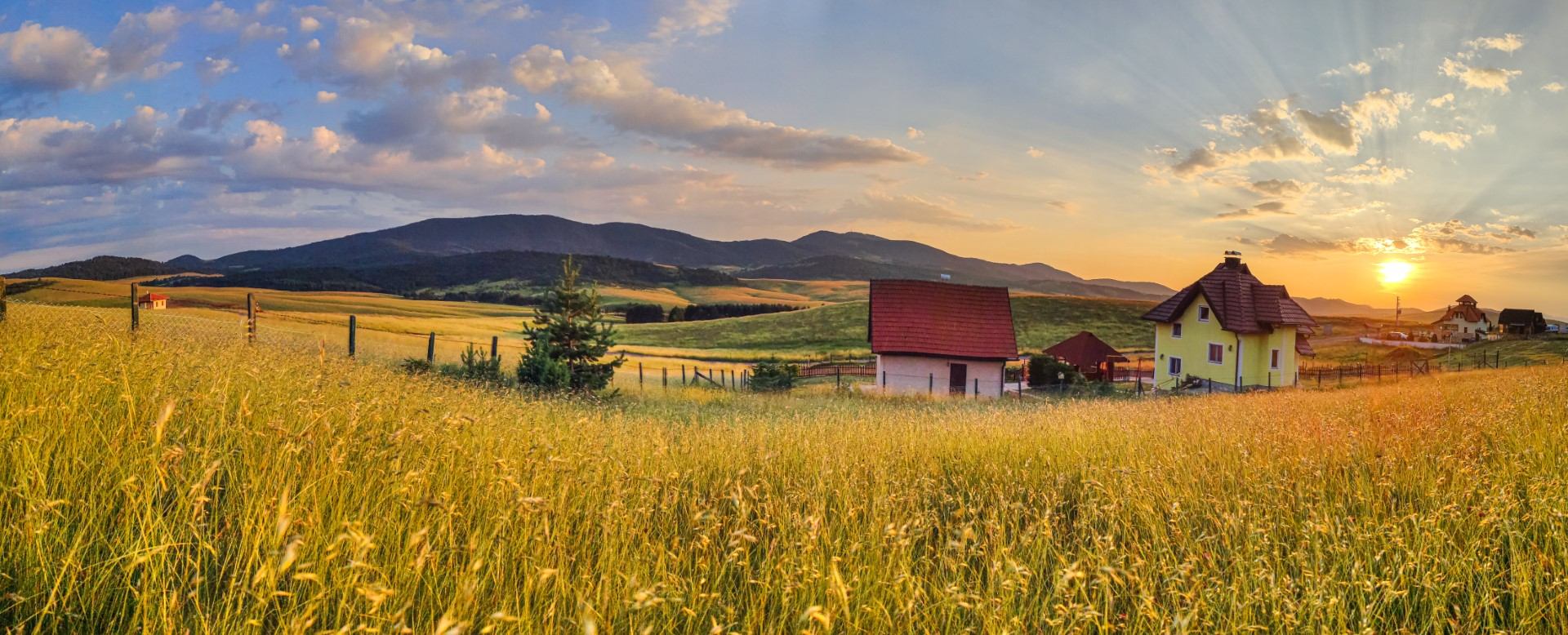
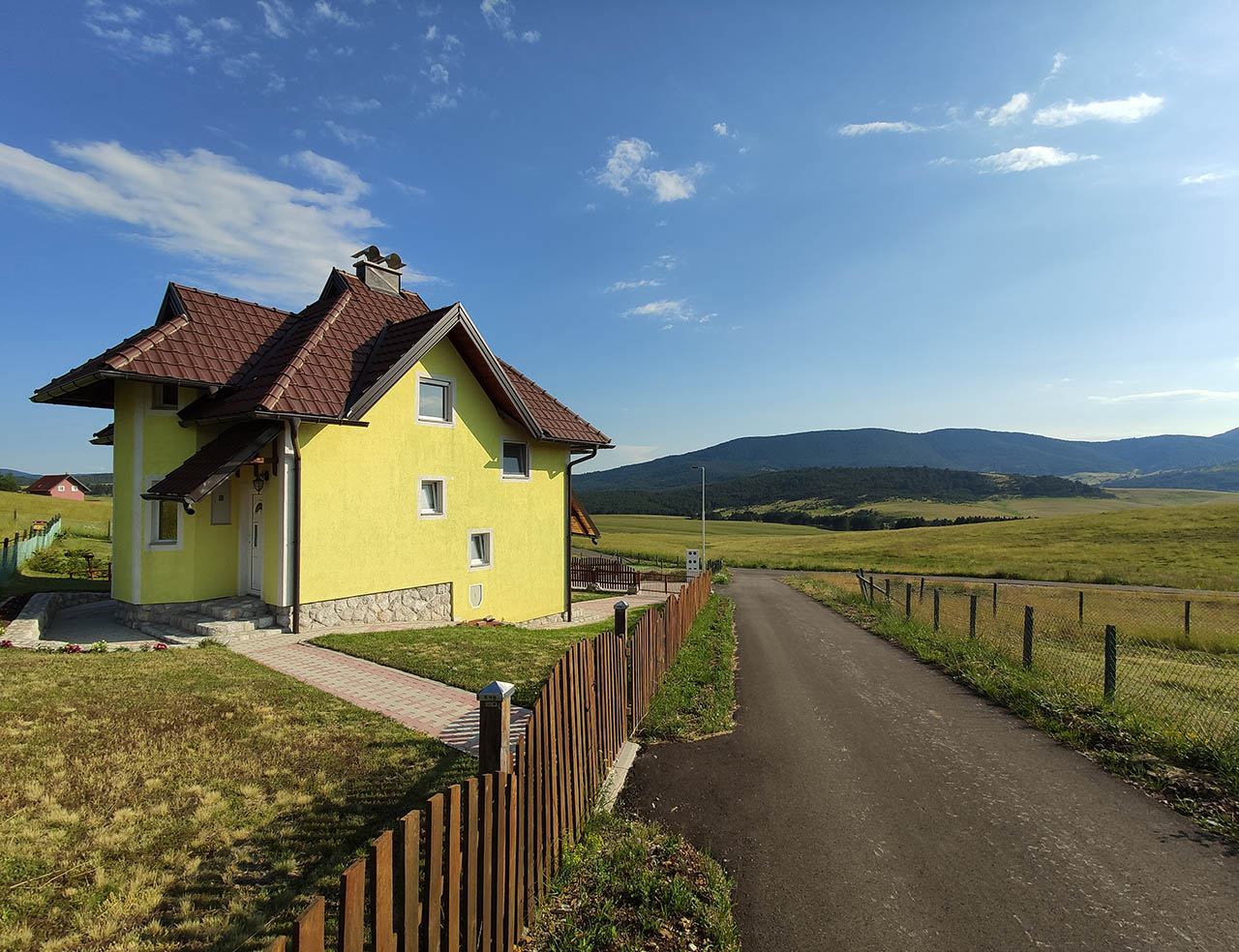
What for centuries was bare rock and summer pasture is today a peaceful place for a holiday – at the foot of Čigota and Tornik, on the very land that, according to tradition, Smiljana received three hundred years ago. The Smiljanić family’s holiday homes stand right here, in the settlement that still bears her name: Smiljanića Zakosi (often also called Smiljanski Zakosi). The same air, the same sunny slope, the same silence – only without the cold that once drove people down the mountain before winter.